
Wood-burning sauna heaters represent the most traditional way of heating a sauna. For many sauna enthusiasts, the crackling fire, the smell of burning wood and the slower heat-up process are an essential part of the sauna experience.
At the same time, wood-burning heaters are not simply an alternative to electric heaters. They require a different mindset, more preparation and careful consideration of location, installation and everyday use.
This article explains how wood-burning sauna heaters work, what to realistically expect from them and how the wood-burning heaters used by Polaris Sauna differ in practice.
How Wood-Burning Sauna Heaters Work
A wood-burning sauna heater heats sauna stones using an open fire chamber. The heat output depends on firewood quality, airflow, chimney draft and how the fire is managed during the heat-up phase.
Unlike electric heaters, wood-burning heaters do not offer automatic temperature control. The sauna temperature is influenced directly by the fire and requires continuous attention during operation.
This manual control is part of the traditional sauna ritual, but it also means less predictability compared to electric heating.
Heat-Up Time and Sauna Use
Wood-burning sauna heaters generally require longer heat-up times than electric heaters. Fire preparation, lighting and gradual heating are all part of the process.
Because of this, wood heaters are best suited for longer, planned sauna sessions rather than spontaneous use. They work well when the heating process itself is seen as part of the overall sauna experience.
For users who want quick, repeatable and low-effort sauna sessions, electric heaters usually offer a more practical solution.
Installation and Safety Requirements
Installing a wood-burning sauna heater requires careful planning and strict adherence to safety guidelines.
Important considerations include:
- chimney and flue system
- safety distances to walls and benches
- fireproof floor protection
- sufficient ventilation
Installation must always follow manufacturer specifications and local regulations. Compared to electric heaters, installation is more complex and should be clarified early in the planning stage.
Location, Smoke and Neighbours
Smoke is an unavoidable aspect of wood-burning sauna heaters.
For this reason, location plays a critical role. Wood heaters are best suited for rural settings, large gardens or properties with sufficient distance to neighbouring buildings.
In residential areas or housing estates, smoke and chimney placement can quickly become an issue. In such cases, electric sauna heaters are often the more neighbour-friendly and practical choice.
Maintenance and Ongoing Effort
Wood-burning sauna heaters require regular maintenance and ongoing effort.
Typical tasks include storing and handling firewood, removing ash, cleaning and inspecting the chimney and monitoring the fire during operation.
Many users enjoy this hands-on approach, but it is important to understand that wood heaters demand more time and responsibility than electric heaters.
Wood-Burning Sauna Heaters Used by Polaris Sauna
Polaris Sauna offers a selected range of proven wood-burning sauna heaters designed for reliable performance and long-term outdoor use. Each model serves a specific purpose depending on sauna size, usage frequency and available space.
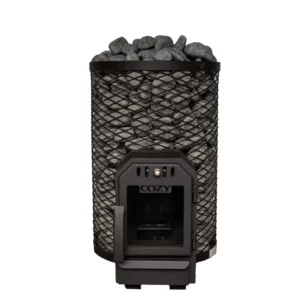
Cozy 12
The Cozy 12 is a compact wood-burning sauna heater designed for smaller garden saunas. It offers straightforward operation, efficient combustion and reliable heat output. This heater is well suited for users who want a traditional sauna experience in a smaller setting without excessive complexity.
Cozy 18
The Cozy 18 provides higher heat output and is suitable for medium-sized garden saunas. It supports more intensive sauna use and delivers stable heat when properly managed. This model is a good choice for users who prefer a classic wood-fired sauna experience and plan to use the sauna regularly.
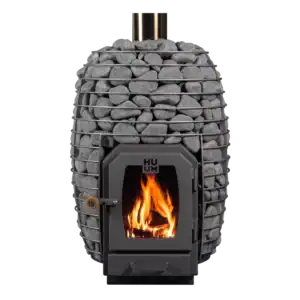
The HUUM Hive Wood 13 is a wood-burning stone column heater with a large stone capacity. The high stone mass allows softer, more even heat and generous water infusions. This heater is designed for users who value a premium sauna atmosphere and are comfortable with the additional effort required by wood heating.
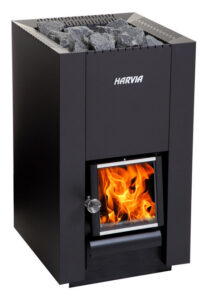
The Harvia Linear 18 Compact combines a traditional wood-burning concept with a modern, compact design. It is suitable for medium-sized saunas where space is limited but reliable heat output is still required. The glass door allows visual control of the fire and adds to the sauna atmosphere.
Choosing the Right Wood-Burning Heater
The right wood-burning sauna heater depends on sauna size, intended usage, available outdoor space and willingness to manage the heating process manually.
Compact heaters are suitable for smaller saunas and occasional use, while larger heaters with higher stone capacity provide more stable heat for longer sessions. Careful planning ensures safe operation and a satisfying sauna experience.
Wood vs. Electric – A Deliberate Choice
Wood-burning sauna heaters deliver a unique and authentic sauna atmosphere, but they are not a universal solution.
They work best when chosen deliberately, with a clear understanding of the installation requirements, ongoing effort and everyday responsibilities involved. For many garden saunas, electric heaters remain the more practical option, while wood-burning heaters are ideal for specific locations and user preferences.
If you want to compare both heating systems directly, our article on electric vs. wood sauna heaters provides a clear overview of the differences and helps guide the initial decision.
If you want to explore electric heating in more detail, our guide to electric sauna heaters explains power requirements, electrical connections and the different electric heater models used by Polaris Sauna.
