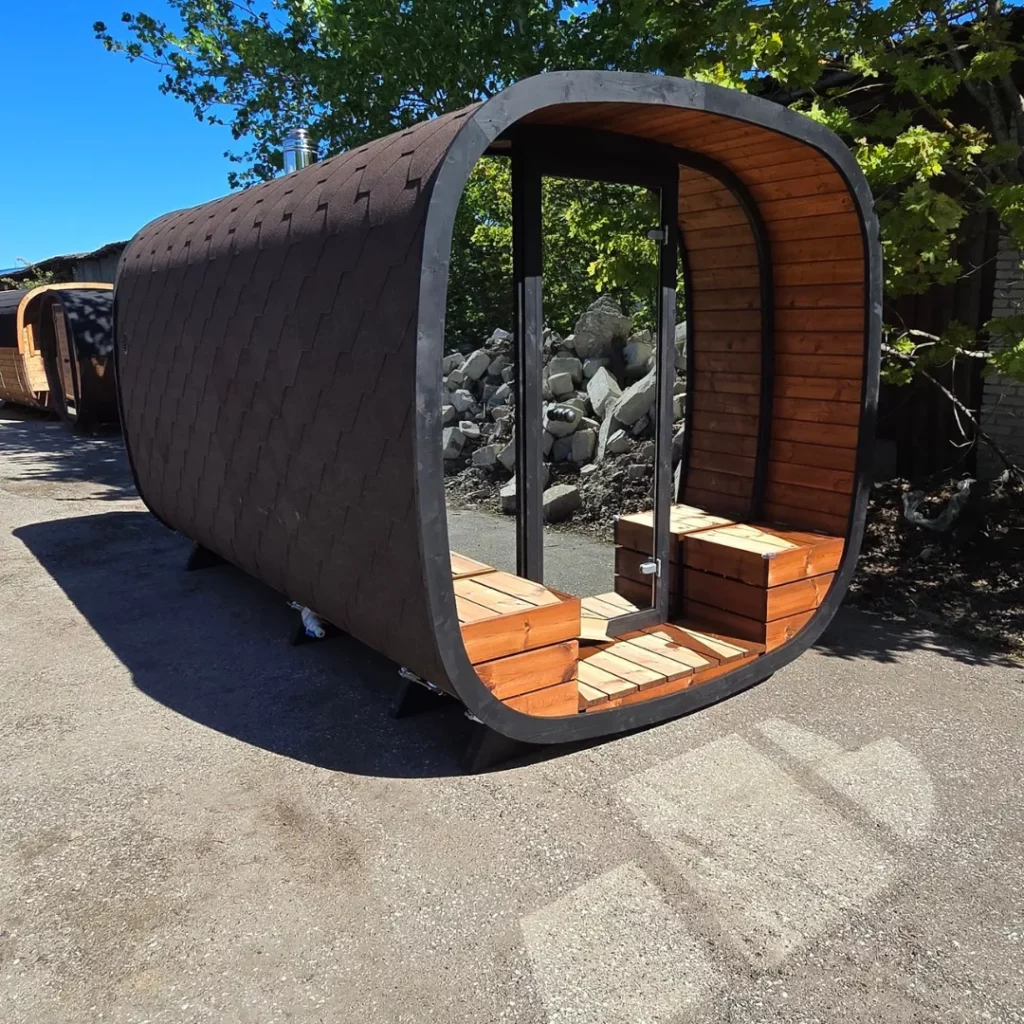
More protection, less maintenance, a well-considered upgrade
Outdoor saunas are designed for external use. As standard, they are equipped with bitumen shingles on the roof, which provide reliable protection against direct rain from above.
This setup is proven and works well in Irish weather conditions.
At the same time, there is an upgrade that offers additional benefits:
extending the shingles down the side walls to the bottom.
This is not a required feature, but a functional upgrade that can significantly reduce maintenance over time.
For many locations in Ireland, especially exposed gardens or freestanding installations, we recommend this option as a practical enhancement.
How water actually affects a sauna
In reality, water does not only act from above:
- rain often hits the sauna at an angle due to wind
- moisture reaches the side walls directly
- some water runs off the roof and down the walls
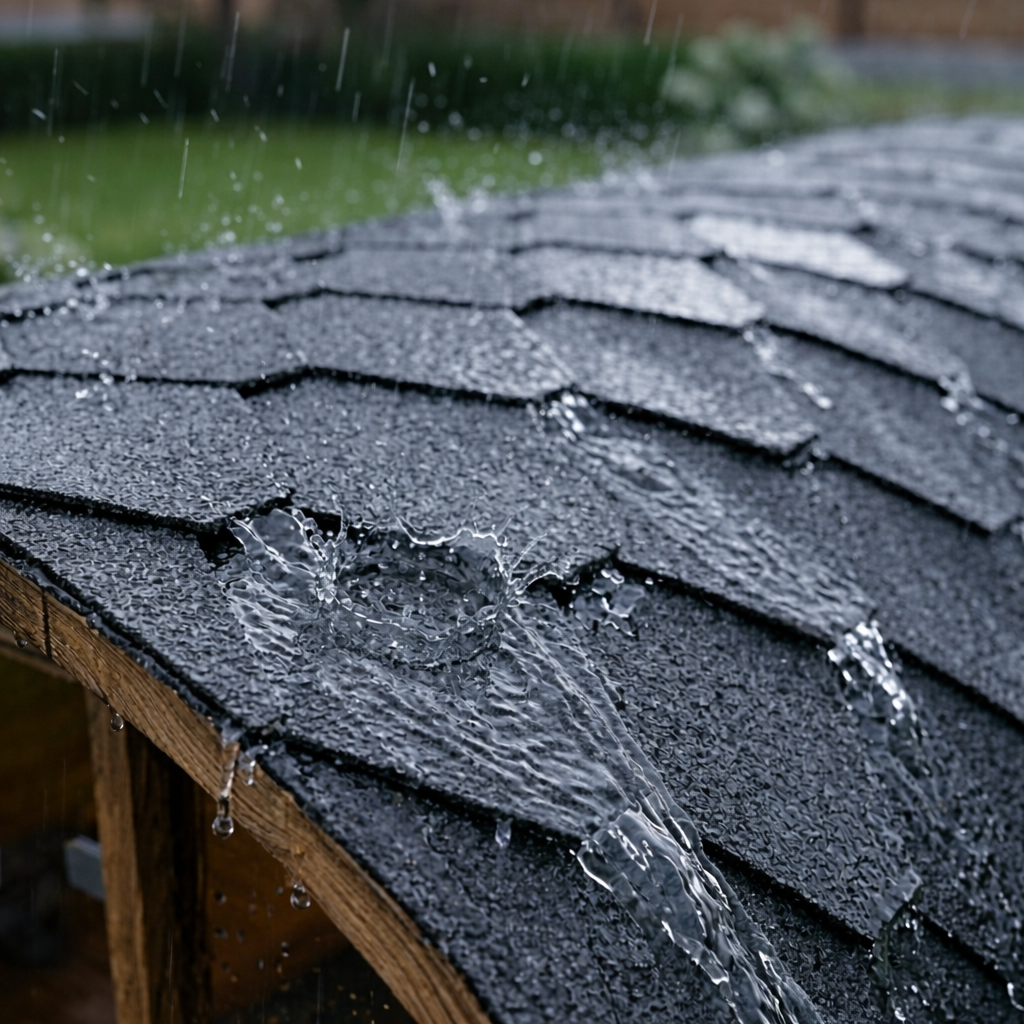
Most sauna roofs include a drip edge. This helps a large portion of the water to fall off cleanly.
However, it is important to understand:
A drip edge reduces water flow, but does not fully prevent it.
During longer periods of rain or with fine moisture, a thin film of water can still travel along the surface and run down the walls. This is normal and taken into account in the design, but it does mean that the side walls are regularly exposed to moisture.
What extended shingles add
By extending the shingles down the side walls, an additional protective layer is created.
Covered areas require no maintenance
Where shingles are installed, the wood is fully protected from direct weather exposure. These areas generally do not require ongoing treatment, as they are not exposed to rain or UV.
Clear separation between protected and exposed areas
Areas without shingles behave as usual and remain exposed to the elements. The key difference is that a significant portion of the exterior surface is now permanently protected.
Significantly reduced maintenance
Because a large part of the sauna is covered by shingles, the overall maintenance effort is reduced. Only the remaining visible wood surfaces need to be treated, rather than the entire exterior.
Material choice: Thermowood and Spruce
In addition to external protection, the material itself plays an important role.
Spruce
A natural softwood with a classic sauna appearance. Suitable for outdoor use, but requires regular maintenance, especially on exposed surfaces.
Thermowood
Thermally modified timber with improved properties:
- greater dimensional stability
- reduced moisture absorption
- improved durability in changing weather conditions
Thermowood is very well suited for Irish conditions, even without additional upgrades.
It is important to distinguish:
- shingles reduce external exposure
- Thermowood improves the material itself
Both work independently and complement each other.
Practical perspective
A sauna with standard roof shingles is a reliable and well-established solution for outdoor use in Ireland.
Extended shingles are not essential, but they are a valuable option for customers who want to:
- reduce maintenance requirements
- protect larger parts of the exterior permanently
- achieve a more consistent ageing of visible wood surfaces
In Irish weather conditions, this option is often particularly beneficial, especially for saunas that are fully exposed to wind and rain.
Conclusion
The standard roof shingle configuration already provides solid protection for outdoor use.
Extending the shingles further down the sides is an additional improvement that protects a significant portion of the exterior surface from weather exposure and eliminates the need for maintenance in those areas. The remaining wood surfaces behave as usual, but are reduced in size.
This allows the overall maintenance effort to be lowered and the sauna to be better adapted to Irish conditions. In many cases, we recommend this upgrade as a practical solution for long-term durability and reduced upkeep.