
Choosing the right firewood is one of the most important factors when operating a wood-fired sauna stove. It directly affects heat-up time, temperature stability, cleanliness of the burn and long-term maintenance of the stove and chimney.
Not all types of wood behave the same. Some burn hot and clean, while others create more smoke, soot or moisture.
Key Factors When Choosing Firewood
Before looking at specific wood types, there are three core criteria that matter:
Moisture Content
Firewood should be properly seasoned and dry.
Ideally below 20% moisture content.
Wet wood:
- produces less heat
- creates more smoke
- leads to soot buildup in the chimney
Dry wood:
- burns efficiently
- reaches higher temperatures
- keeps the system cleaner
Energy Density
Different woods contain different amounts of energy per volume.
Higher density wood:
- burns longer
- provides more stable heat
Lower density wood:
- burns faster
- is useful for kindling and quick heat-up
Clean Combustion
For a sauna, a clean burn is essential.
Poor combustion leads to:
- unpleasant smells
- residue on stones
- faster wear of the stove
Best Firewood Types for Sauna Use
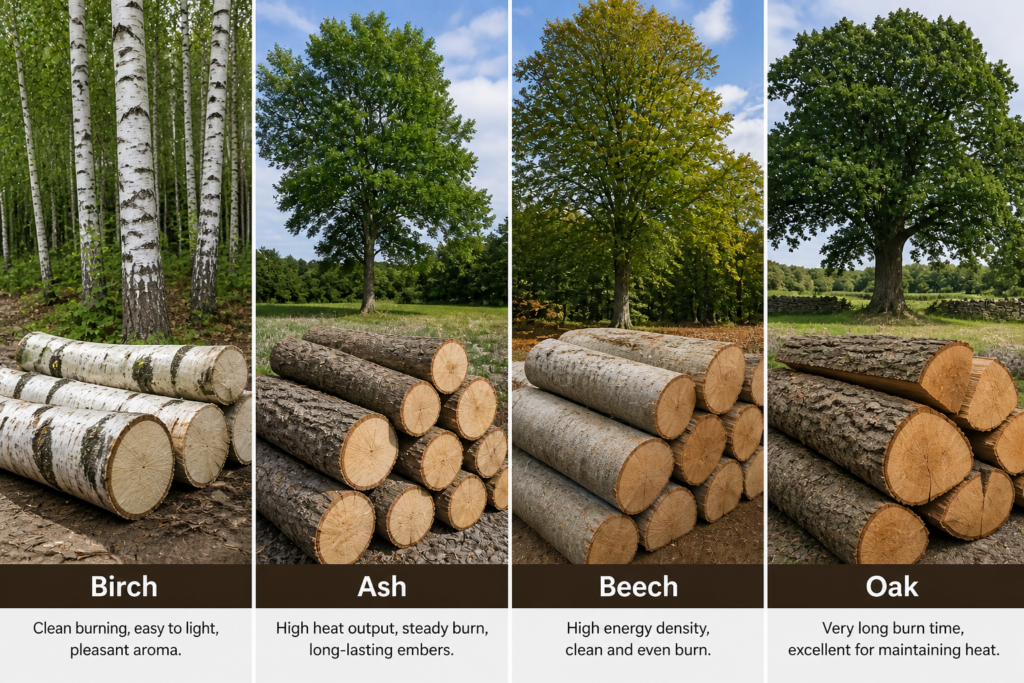
Birch
Birch is widely considered the ideal sauna firewood.
Advantages:
- burns cleanly
- produces steady heat
- pleasant, mild aroma
- easy to split
It is a very balanced option and commonly used in Nordic countries.
Ash
Ash is another excellent choice.
Advantages:
- very good heat output
- burns even when not perfectly dry
- long-lasting embers
Ash is slightly denser than birch and provides very stable heat over time.
Oak
Oak is a high-density hardwood.
Advantages:
- very long burn time
- high heat output
Considerations:
- slower to ignite
- best used once the fire is already established
Oak is ideal for maintaining temperature rather than starting the fire.
Beech
Beech is a premium hardwood with very consistent performance.
Advantages:
- clean burn
- high energy density
- minimal smoke when dry
It behaves similarly to ash and is often used in high-quality setups.
Wood Types to Use with Caution
Softwoods (Pine, Spruce)
These are commonly available but not ideal as the main fuel.
Characteristics:
- burn quickly
- contain resin
- can produce sparks and soot
They can be used:
- for kindling
- for initial ignition
But should not be the primary fuel for a sauna session.
Treated or Painted Wood
This should never be used.
Reasons:
- releases harmful chemicals
- damages the stove and chimney
- creates unpleasant and potentially dangerous fumes
Practical Firing Strategy
A typical firing sequence works best:
- Start with small, dry softwood or kindling
- Add medium-sized logs to build the fire
- Switch to hardwood (birch, ash, oak) for stable heat
To maintain temperature:
- add 1–2 logs every 30–45 minutes
- adjust airflow via vents
Storage and Preparation
Proper storage is essential:
- keep wood off the ground
- store in a ventilated area
- protect from rain but allow airflow
Freshly cut wood typically needs:
- 12–24 months to season
Summary
For a wood-fired sauna stove:
- Use dry hardwood as the main fuel
- Birch is the most balanced and reliable option
- Ash, beech and oak provide longer and stronger heat
- Use softwood only for ignition
- Avoid treated or wet wood entirely
Choosing the right firewood ensures:
- better performance
- a more pleasant sauna experience
- lower maintenance over time
